
Summary:
Nobody plans to need a tow truck. And when you do need one — stuck on the shoulder of the I-10 at 9 PM, or sitting in a parking lot with a car that won’t start — the last thing you want is to call a company and have no idea what it’s going to cost until the bill shows up.
That uncertainty is one of the most common complaints people have about towing. So this page exists to clear it up. We’ll walk you through what actually determines the cost of a tow in Phoenix and Maricopa County, what fair pricing looks like, and what questions you should ask before you ever say yes to a tow truck driver.
What Determines Towing Prices in Phoenix, AZ
Towing isn’t a flat-rate service. What you pay depends on a handful of variables, and knowing them ahead of time puts you in a much better position when you’re making a call under pressure.
The two biggest factors are the base hook-up fee and the per-mile rate. The hook-up fee is what gets charged the moment a truck is dispatched to your location — it covers the driver’s time, the equipment, and the trip out to you. In Phoenix, most companies charge between $75 and $95 just to show up, before a single mile is driven. The per-mile rate then applies for every loaded mile your vehicle travels to its destination. Nationally, that rate averages around $4.75 per mile, though local companies vary.
Beyond those two, time of day, vehicle type, and the nature of the situation all play a role. A standard passenger car towed five miles during the day is a very different bill than a specialty vehicle recovered from a ditch at 2 AM.
Tow Truck Cost Breakdown: Base Fee, Mileage, and What Else Gets Added
Here’s how a typical tow bill actually comes together in Phoenix. You start with the base hook-up fee — we usually charge $65 to $95 depending on the situation. Then you add the per-mile charge from your location to the drop-off point. If you’re being towed ten miles across Phoenix, and the rate is $5 per mile, that’s $50 in mileage on top of the hook fee. A reasonable total for that scenario would land somewhere between $115 and $145.
After-hours surcharges are real and worth asking about upfront. Many towing companies in Phoenix add $25 to $100 on top of standard rates for calls that come in late at night, on weekends, or on holidays. We quote you the full price before dispatch — no hidden charges added later.
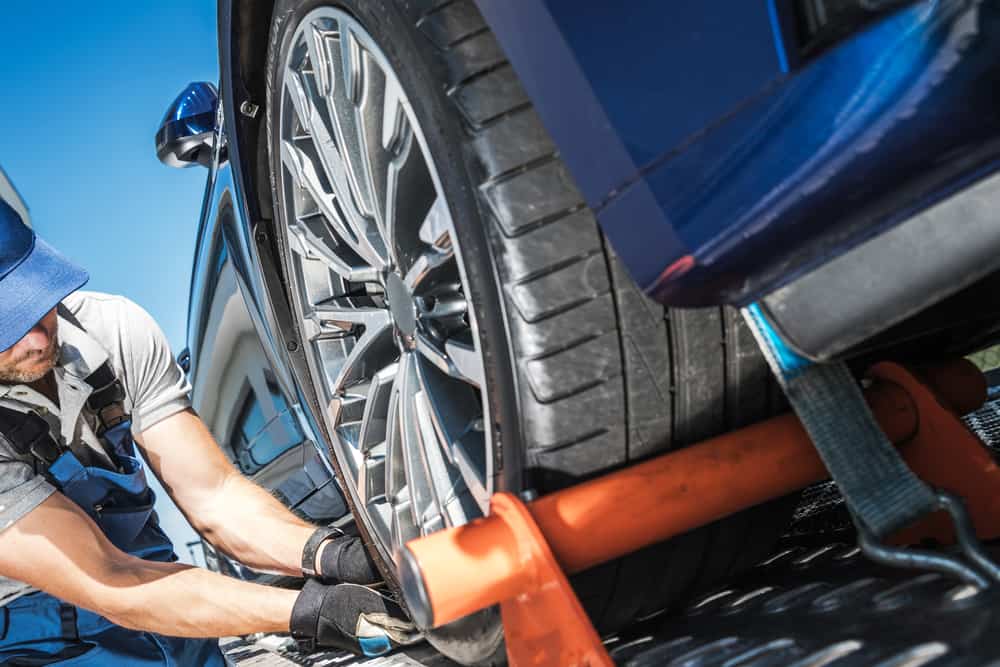
Vehicle type matters more than most people realize. A standard sedan on a flatbed is straightforward. An AWD vehicle, a low-clearance sports car, or an RV is a different situation entirely. Flatbed towing — which is the safest method for most vehicles, especially anything with all-wheel drive — typically costs around 30% more than wheel-lift towing. If you drive something other than a basic front-wheel-drive car, make sure the company you’re calling can actually handle it properly, because improper towing technique can cause real drivetrain damage.
Long-distance tows work a little differently. If you’re moving a vehicle 50 or more miles, some companies will offer a lower per-mile rate since the fixed costs spread out over a longer haul. But for most Phoenix-area tows — which tend to cover 5 to 20 miles across Maricopa County’s sprawl — you’re working with the standard base-plus-mileage formula.
One thing that catches people off guard: storage fees. If your car gets towed to a lot rather than directly to a shop or your home, daily storage charges can accumulate fast. Always confirm where your vehicle is going and whether storage fees apply.
Does Phoenix's Heat Actually Change What You'll Pay for Roadside Help?
Not directly — but it absolutely changes how often you’ll need it, and that’s worth understanding if you’re deciding between paying per incident versus buying a roadside plan.
Phoenix is one of the hardest places in the country on car batteries. Heat is the number one cause of battery failure nationally, and in a city that regularly hits 110°F and above in the summer, that effect is dramatically amplified. Most batteries in Phoenix last two to three years — sometimes less — compared to four or five years in cooler climates. The extreme pavement temperatures (which can exceed 150°F on Phoenix roads in July and August) also accelerate tire wear and increase blowout risk.
What this means practically is that summer in Phoenix — June through September — is peak season for roadside calls. Batteries die. Tires blow. Engines overheat. If you’ve been driving the same battery for two years in this heat, it’s not a question of if it’ll fail, it’s more a question of when and where.
Then there’s the snowbird season, which runs roughly November through April. Maricopa County’s population swells significantly during these months as retirees and winter visitors drive in from colder states, many of them in RVs or older vehicles that are more prone to breakdowns. This creates a secondary demand spike that keeps roadside companies busy well outside the summer months.
The takeaway here is that in Phoenix, roadside assistance isn’t really an “if” expense — it’s more of a “when.” That context matters when you’re evaluating whether to pay $65–$150 per incident or invest in a membership plan that covers you throughout the year.
Affordable Towing in Phoenix: What Fair Pricing Actually Looks Like
“Affordable” is a word that gets thrown around a lot in the towing industry, usually without much to back it up. So let’s be direct about what it actually means in the Phoenix market.
Our service calls start at $65. That’s below the published hook fees of most major Phoenix-area towing companies, which typically start at $85 to $95 before mileage is even factored in. We quote you the price before the truck rolls — no surprises when the job is done, no cash-only demands, no line items that weren’t mentioned upfront. You know what you’re paying before you say yes.
That’s not a sales pitch. It’s just how it should work, and frankly, it’s not how every company in this market operates.
Is a Roadside Assistance Membership Worth It Compared to Paying Per Tow in Maricopa County?
This is one of the most common questions people have when they’re researching towing costs, and it deserves a straight answer rather than a runaround.
The national average cost of a single tow is around $109. A typical roadside assistance membership — through AAA or a similar plan — runs roughly $60 to $100 per year depending on the tier. If you need even one tow per year, a plan can pay for itself. If you need two, it’s a clear win financially.
But the calculation isn’t purely about towing. A good roadside plan also covers jump starts, tire changes, lockouts, and fuel delivery — services that, if you’re paying out of pocket, can each run $50 to $100 or more depending on the provider and the situation. When you add those up across a full year, a membership plan often makes strong financial sense for Phoenix drivers who put real miles on their cars.
That said, membership plans have limits worth knowing. Many cap towing coverage at five to ten miles per incident. If you break down on the far east side of Mesa and need to get your car to a shop in Glendale — a distance that could easily exceed 30 miles across Maricopa County — you may be paying the overage out of pocket regardless of your plan. Reading the fine print on mileage caps matters here in a way it might not in a denser, more compact city.
There’s also the response time variable. Insurance-dispatched tow trucks can have very long wait times — sometimes measured in hours, not minutes. In Phoenix’s summer heat, waiting two to four hours on the side of the road isn’t just inconvenient, it’s a genuine safety issue. Calling us directly often means faster arrival, which in extreme heat has real value beyond the dollar amount on the invoice.
Common Questions About Towing Costs in Phoenix — Answered Honestly
**Does my car insurance cover towing?** Many auto insurance policies include roadside assistance as an add-on, but coverage varies widely. Some plans cover towing up to a set dollar amount — often $50 to $75 — which may not fully cover a longer tow in Phoenix or Maricopa County. Others require pre-authorization before a tow is dispatched. If you’re not sure what your policy covers, the middle of a breakdown is not the best time to find out. It’s worth a quick call to your insurer before you need it.
**Why does towing sometimes cost more at night?** After-hours surcharges are common in the industry. Drivers working late-night shifts, weekends, and holidays are often compensated at higher rates, and that cost gets passed along. We don’t charge surprise fees — when you call us, we’ll tell you the full cost upfront regardless of what time it is.
**Do I really need a flatbed, or is any tow truck fine?** For most standard front-wheel-drive vehicles, a wheel-lift tow is fine for short distances. But if you drive an AWD or four-wheel-drive vehicle, a flatbed is strongly recommended — towing an AWD car with the drive wheels on the ground can cause serious and expensive transmission damage. The same applies to low-clearance vehicles, classic cars, and anything you’d rather not risk. We handle specialty vehicles including RVs and exotics, and we’ll always use the right equipment for what you’re driving.
**What if I don’t actually need a tow — I just can’t get my car started?** This is more common than people think, and it’s worth a quick diagnostic before you commit to a tow. A dead battery, a tire that needs changing, or a lockout situation can all be resolved on-site without towing at all. We offer battery replacement, jump starts, tire changes, and lockout service — so if a tow turns out to be unnecessary, you’re not paying for one. That’s the advantage of calling a company that can handle the full situation rather than just a tow truck that has one tool for every problem.
Getting a Fair Price on Towing in Phoenix Starts With Knowing What to Ask
The towing industry has a reputation problem, and it’s not entirely undeserved. Vague pricing, surprise fees, and slow response times are real complaints that real people have had. But it doesn’t have to go that way.
If you know the right questions — what’s the base fee, what’s the per-mile rate, are there after-hours charges, where exactly is my car going — you’re in a much better position before you ever agree to anything. And if you’re calling a company that gives you straight answers upfront, you’re already ahead.
We’ve been serving the Phoenix metro for 13 years, covering everything from Glendale to East Mesa, 24 hours a day. Whether you need a tow, a battery replacement, a jump start, or just someone to tell you what’s actually wrong with your car before you spend money you don’t need to spend, On Time Emergency Roadside And Battery Service LLC is a call away — and the price won’t change between the phone and the invoice.