Summary:
You’re on the shoulder of a Maricopa County freeway. Your car isn’t moving. Your phone is at 30%. And you have no idea whether to call for roadside help or a tow truck — because honestly, you’ve never had to think about it before.
Most drivers haven’t. And that’s exactly when the confusion gets expensive.
Calling the wrong service means waiting twice, paying more than you should, or sitting in 110-degree heat longer than necessary. We’ll walk you through the difference between roadside assistance and towing, help you figure out which one fits your situation, and make sure you’re not guessing when it matters most.
What Is Roadside Assistance — and Can It Actually Fix My Car?
Roadside assistance is on-site help. A technician comes to where you are and tries to resolve the problem without moving your vehicle at all. If your battery died, we jump it or replace it on the spot. If you’ve got a flat, we swap in your spare. Locked out? We get you back in. Out of gas? We bring enough to get you to the nearest station.
The key word is “on-site.” Roadside assistance is designed for situations where your car can be made drivable again without a shop visit. It’s faster, less expensive than a tow, and in many cases, it’s all you need.
What it can’t do is fix a mechanical failure — a blown engine, a snapped timing belt, a transmission that gave up. Those situations require a shop, which means your car needs to get there first.
What Does Roadside Assistance Cover? Common Services Explained
The most common roadside assistance services cover the situations that strand drivers most often: dead batteries, flat tires, lockouts, and empty fuel tanks. Each of these can be handled on the spot by a qualified technician without ever putting your car on a flatbed.
A dead battery is the most frequent culprit in Maricopa County — and for good reason. Arizona’s extreme heat doesn’t just drain batteries faster in the moment; it shortens their overall lifespan. While the national average battery life runs around four to five years, drivers across the Phoenix metro often see batteries fail in two to three years because the heat accelerates internal deterioration. A jump start gets you moving if the battery still has some life left. If it’s fully dead, an on-site battery replacement means you drive away on a fresh one — no tow, no shop visit, no wasted afternoon.
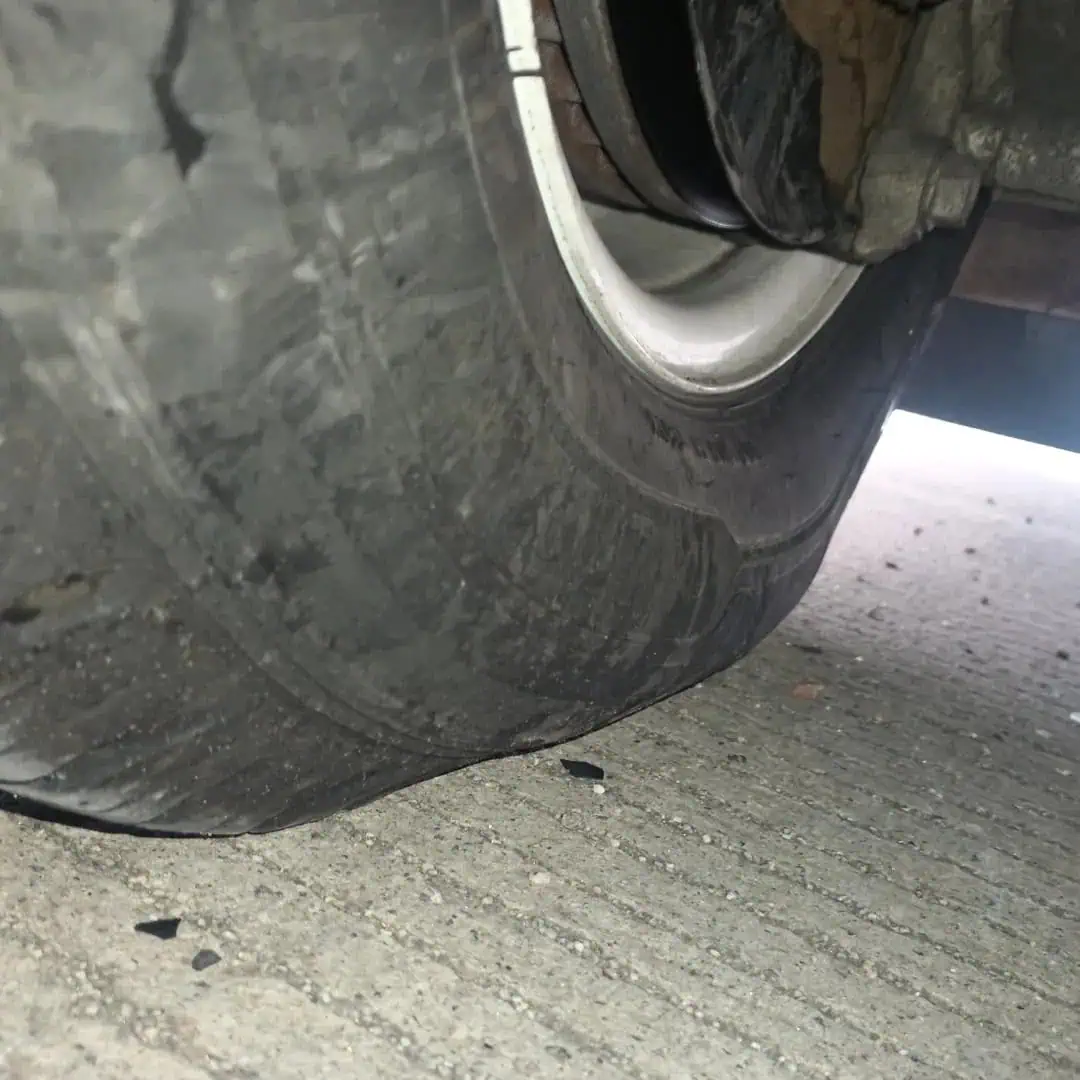
Flat tires are another story that’s changing. Newer vehicles increasingly skip the spare tire altogether, which means a flat that used to be a five-minute roadside fix now sometimes requires a tow. If you have a spare and the tire isn’t damaged beyond a simple swap, we handle it cleanly. If you don’t have a spare — or the tire blew out in a way that damaged the rim — that’s when towing enters the picture.
Lockouts and fuel delivery are straightforward. If you’ve locked your keys inside or run dry on gas, a roadside technician can resolve both without any mechanical work at all. These are purely logistical problems with fast, on-site solutions.
Towing vs. Roadside Assistance Cost: What You're Actually Comparing
Cost is usually what pushes people to search this topic in the first place. Nobody wants to pay for a tow if a jump start would have done the job.
The national average cost of a tow is around $110, and that number climbs with distance, time of day, vehicle type, and terrain. A tow across Maricopa County — say, from Surprise to a shop in Tempe — isn’t a short haul. Distance adds up fast on a service priced per mile. And if it’s a weekend night or a holiday, expect rates to reflect that.
Our roadside assistance calls typically cost much less. Service calls start at $65, and for many common situations — a jump start, a tire swap, a fuel drop — that’s the entire cost. You’re paying for a technician to come to you, solve the problem on the spot, and send you on your way. No shop drop-off, no waiting for an estimate, no arranging a ride.
The cost gap matters most when you’re not sure which service you actually need. Calling a tow truck when you only needed a battery jump means paying tow rates for a problem that didn’t require one. Calling for roadside help when your car genuinely needs a shop means waiting for that service, then waiting again for a tow — and potentially missing the mechanic’s business hours in the process.
This is exactly why working with a provider who handles both makes a real difference. When a technician arrives and assesses the situation in person, they can tell you immediately whether the fix is on-site or whether a tow is the smarter move. No guesswork. No second call. No paying twice.
When Do You Need a Tow Truck Instead of Roadside Help?
Towing is the right call when your car can’t be made drivable on the spot — full stop. If the problem is mechanical, structural, or requires a shop to diagnose and repair, the vehicle needs to get there somehow. That’s what towing is for.
The tricky part is that most drivers don’t know what’s wrong with their car when they’re standing on the shoulder of Loop 101 at 7 a.m. That uncertainty is normal. But there are some clear signals that point toward a tow over a roadside fix, and knowing them in advance makes the call easier.
Signs Your Car Needs a Tow, Not a Quick Fix
The clearest sign is when the car won’t start and a jump doesn’t help. If a fresh jump start doesn’t get the engine turning over, the problem likely goes beyond the battery — it could be the alternator, the starter, or something else entirely. That’s a shop diagnosis, which means a tow.
Engine overheating is another one. In Maricopa County’s summer heat, cooling systems work harder than almost anywhere else in the country. If your temperature gauge is in the red and steam is coming from under the hood, driving the car — even to the nearest exit — can cause serious engine damage. The safer and smarter move is to stop, call for a tow, and let the mechanic assess it before you compound the problem.
Accidents, collision damage, and structural issues are obvious tow situations. If the car isn’t safe to drive — wheels misaligned, airbags deployed, suspension compromised — it shouldn’t be on the road regardless of whether the engine runs.
Transmission problems often feel like the car just stops responding. If you’re pressing the gas and nothing is happening, or if the vehicle is making grinding or clunking sounds under load, you’re likely looking at a tow. Same goes for a seized brake or a snapped belt — anything that affects the drivetrain in a way that makes driving dangerous or impossible.
Arizona’s heat makes some of these failures more likely than they would be in a milder climate. Belts and hoses degrade faster under sustained high temperatures. Cooling systems that are marginal elsewhere fail outright in a Phoenix summer. If your vehicle is older or has deferred maintenance, the odds of a breakdown requiring a tow are meaningfully higher than the national average.
Why Calling a One-Stop Provider Changes the Equation Across Maricopa County
Here’s the part most comparison articles skip: the roadside assistance vs. towing question assumes you have to choose before you know the answer. And that’s where the real problem lives.
If you call a roadside-only provider and they can’t fix it, you’re making a second call to a separate tow company. That’s two wait times, two dispatch queues, and two separate bills. In July, on I-10 between Goodyear and downtown Phoenix, that kind of delay isn’t just frustrating — it’s a genuine safety concern. Heat stroke can develop quickly for someone sitting in a non-functional vehicle in triple-digit temperatures.
When you call a provider who handles both roadside assistance and light-duty towing — like we do at On Time Emergency Roadside And Battery Service LLC — the technician who arrives can assess the situation in person and deliver whichever solution is actually needed. If a jump start works, you’re back on the road in minutes. If the car needs a shop, we handle the tow from the same call. No second dispatch. No additional wait.
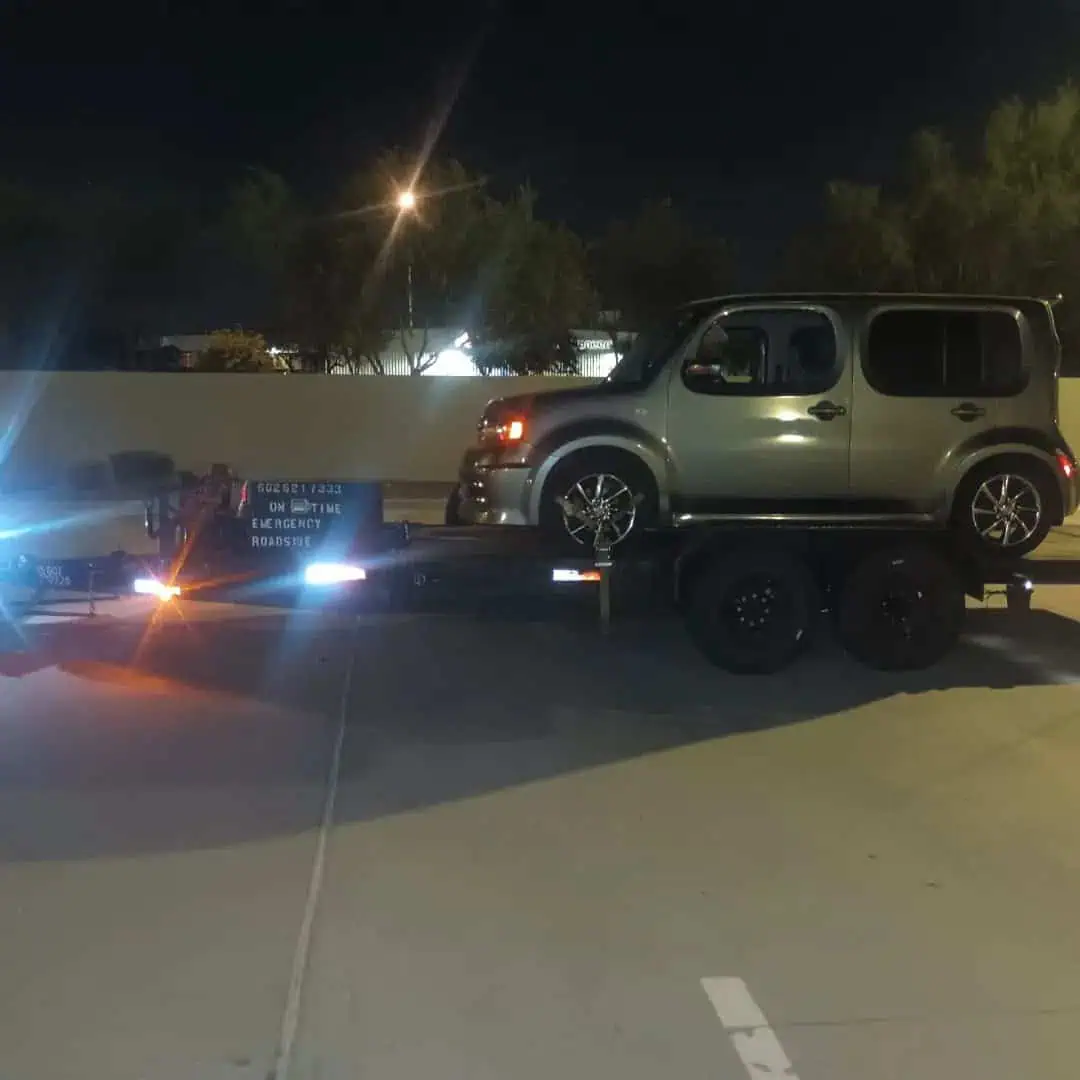
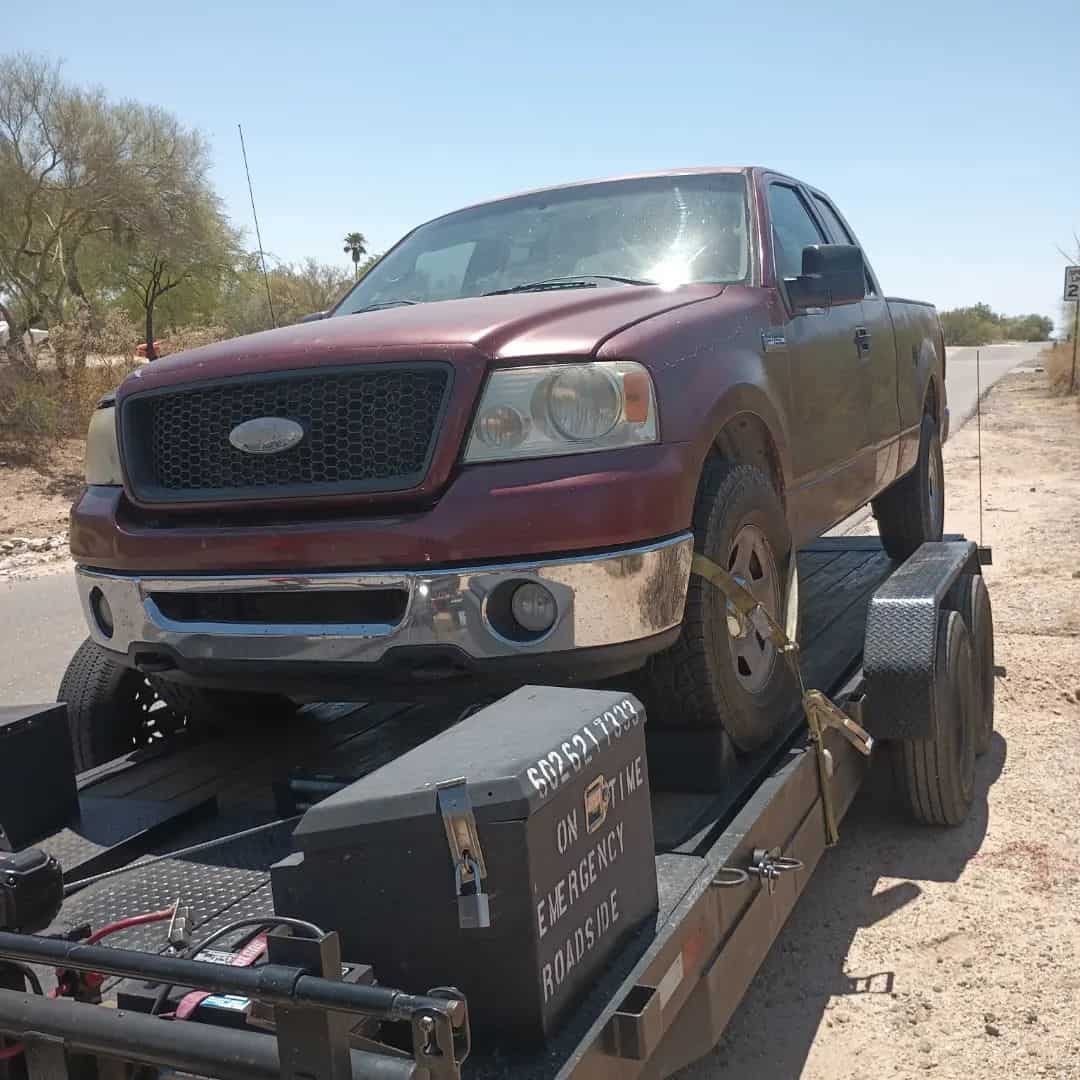
This matters even more for drivers with specialty vehicles. RVs, AWD vehicles, and low-clearance cars each have specific towing requirements that not every provider can meet. We handle RV towing and tilt trailer towing in addition to standard passenger vehicles — so if you’re a snowbird passing through the valley with a trailer, or a retiree whose RV decided to quit on US-60, you’re not stuck searching for a different number.
We’ve covered Maricopa County for over 13 years — from Glendale to East Mesa, Surprise to Queen Creek, and everywhere in between. Our customers have noted arrival times under 30 minutes, and we quote the price before we dispatch so there are no surprises when we arrive.
Roadside Assistance or Towing: Here's How to Make the Right Call
The short version: if your car can be fixed on the spot, roadside assistance is faster, simpler, and less expensive. If it needs a shop, you need a tow. And if you’re not sure — which is most people’s reality in the middle of a breakdown — you need a provider who can answer that question in person.
Maricopa County’s size, heat, and freeway infrastructure make getting this right more consequential than it might be elsewhere. A wrong call on a summer afternoon on I-17 isn’t just an inconvenience.
Save our number before you need it. On Time Emergency Roadside And Battery Service LLC is available 24/7, covers all of Maricopa County, and handles both roadside assistance and towing — so you only have to make one call regardless of what you’re dealing with.