Summary:
Most new year car maintenance guides start with antifreeze and winter tires. If you’re in Glendale, AZ, or anywhere across Maricopa County, you can skip those. Your vehicle’s real enemies aren’t ice and snow — they’re the 110°F summers that bake batteries, break down oil faster than manufacturers expect, and leave tires and brake components quietly worn before you ever notice.
January feels like a fresh start. For Arizona drivers, it’s also the moment when summer damage tends to surface. This checklist covers what to actually check, why the desert changes the math on standard maintenance schedules, and what to do when something’s already past the point of waiting.
Car Battery Winter Tips for Arizona Drivers
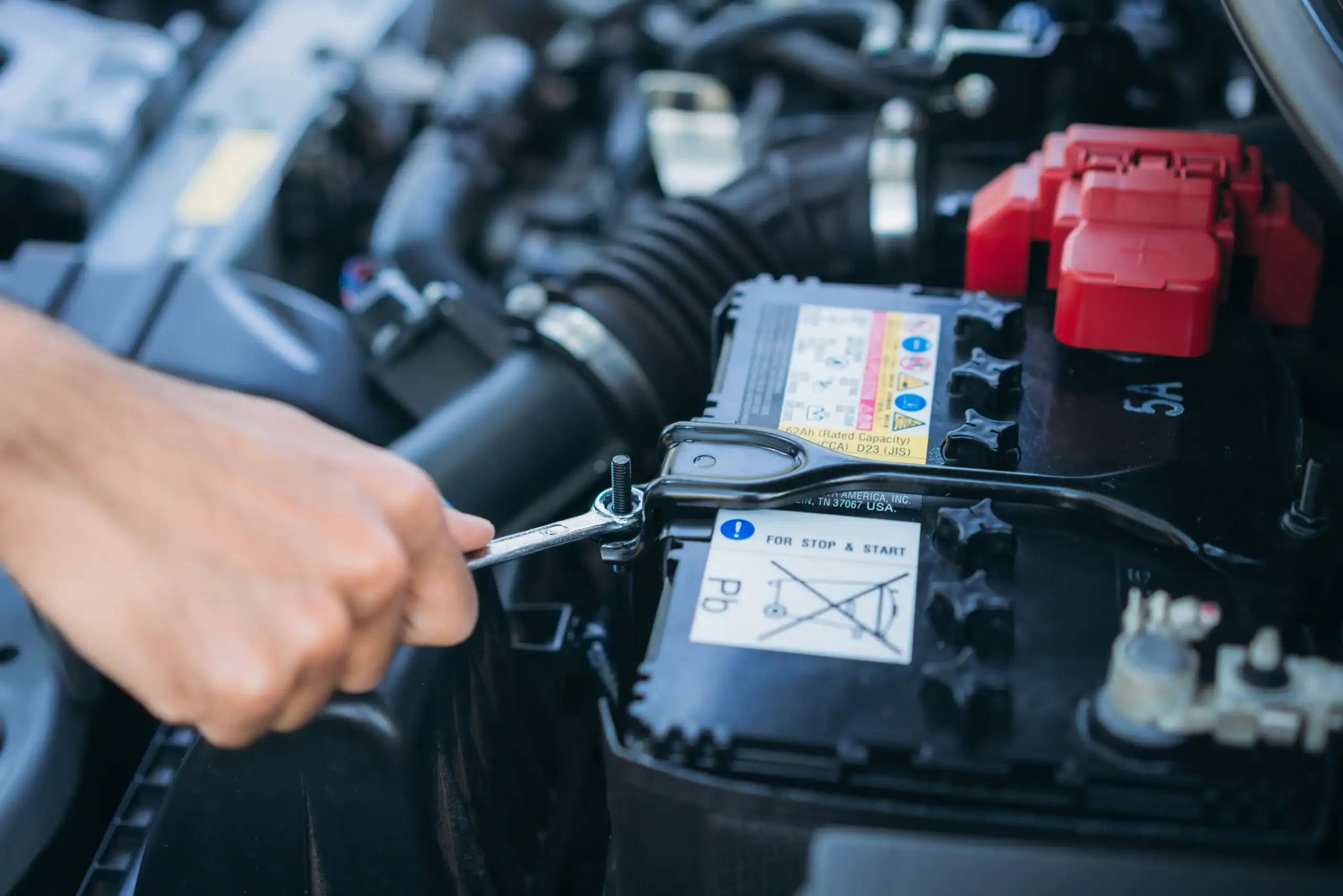
Here’s the part most people get wrong: battery failures in Arizona during winter aren’t caused by cold weather. They’re caused by the summer that just ended. By the time January rolls around, a battery that spent June through September under extreme heat has already lost a significant portion of its capacity — it’s just been limping along quietly ever since.
When overnight temperatures in the Phoenix metro drop into the 40s, even a mildly weakened battery can struggle to deliver enough power to start the engine. That’s the moment it finally gives out. The cold didn’t kill it. The heat did. The cold just exposed it.
Car Battery Warning Signs Arizona Drivers Shouldn't Ignore
The tricky thing about a failing battery is that it doesn’t always announce itself. Your car might start fine in the morning and leave you stranded in a parking lot by afternoon. That said, there are signs worth paying attention to — especially if your battery is three years old or more, which in Arizona’s climate is the point where heat damage becomes a real factor.
Slow cranking is usually the first thing people notice. If the engine takes a beat longer than usual to turn over, that’s the battery working harder than it should. A dashboard warning light is more obvious, but a lot of drivers dismiss it and keep going. Flickering interior lights, a radio that resets itself, or power windows moving sluggishly are all signs that the battery isn’t holding a consistent charge.
Physical signs matter too. If the battery case looks swollen or bloated, that’s a direct result of heat exposure — the internal gases have expanded, and the battery is past the point of testing. Corrosion on the terminals, the white or bluish buildup around the cable connections, is another red flag. It doesn’t always mean the battery is dead, but it does mean the connection is compromised and the battery is under additional stress.
One thing that’s specific to certain vehicles and often overlooked: if you drive a BMW, Audi, VW, or Honda, replacing a battery isn’t as simple as swapping it out. These vehicles require a battery registration process — essentially telling the car’s computer that a new battery has been installed so it can recalibrate the charging system. Skip that step, and you can end up with electrical issues that cost more to fix than the battery replacement itself. We handle that registration as part of every battery replacement on eligible vehicles, which is something most roadside services don’t even offer.
If your battery is showing any of these signs — or if it’s simply been more than two to three years since the last replacement — the beginning of the year is the right time to get it tested or replaced before it makes that decision for you on the side of the I-10.
How to Know If Your Car Battery Needs Replacing vs. Just a Jump Start
A jump start gets you moving. It doesn’t fix anything. If you’ve needed more than one jump start in the past few months, or if the battery dies again within a day or two of being jumped, the battery isn’t holding a charge — and jumping it again is just delaying the inevitable.
The only way to know for certain is a load test, which measures how much power the battery can actually deliver under the conditions your engine demands. Voltage alone doesn’t tell the full story. A battery can read 12.6 volts at rest and still fail under load, which is exactly what happens when a heat-damaged battery passes a basic check but dies the next morning.
We carry the equipment to load test batteries on-site, wherever you are in Maricopa County. If the battery passes, you’ll know. If it doesn’t, we can replace it on the spot — no tow required, no waiting for a shop to open. That’s the practical advantage of our mobile service: the problem gets resolved where you are, not after a tow and a two-day wait for an appointment.
One more thing worth knowing: alternator problems can mimic a dead battery. If your new battery keeps dying, the alternator may not be charging it properly. A good technician can diagnose the difference on the spot. That distinction matters because replacing a battery when the alternator is the actual problem means you’ll be back in the same situation within days.
Vehicle Maintenance Schedule Adjusted for Arizona's Climate
Standard manufacturer maintenance schedules are built around average driving conditions. Arizona is not average. The combination of extreme heat, intense UV exposure, dust, and long highway stretches means several components wear faster here than the generic schedule accounts for.
The 30/60/90K mile intervals are still the right framework for major service milestones — timing belts, transmission fluid, spark plugs. But for the items in between, Arizona drivers generally need to shorten the intervals, not stretch them.
What to Check Every 3 to 6 Months in Arizona's Desert Conditions
Oil is the most common one people underestimate. Heat breaks down engine oil faster than cooler climates do, which means waiting the full interval between changes can leave your engine running on degraded oil longer than it should. Most shops in the Glendale area recommend servicing every 5,000 to 7,500 miles, or every six months — whichever comes first. If you’re doing a lot of highway driving to Flagstaff, Sedona, or Las Vegas, lean toward the shorter end.
Brakes are another area where Arizona’s conditions accelerate wear. Dust and dry roads are harder on brake pads than most people realize, and the monsoon season — July through August — adds road debris and wet braking conditions that compound the wear. By January, if you haven’t had your brakes inspected since spring, it’s worth doing. A visual check of pad thickness and rotor condition takes minutes and can prevent a much more expensive repair down the road.
Tires deserve attention too. Arizona’s UV exposure degrades rubber faster than cooler, cloudier climates. Check the sidewalls for cracking or dry rot, not just the tread depth. Tire pressure also fluctuates more dramatically here because of the temperature swings between hot days and cool nights — a tire that was properly inflated in October may be underinflated by January. Underinflated tires wear unevenly and reduce fuel efficiency, both of which add up over time.
Wiper blades are easy to overlook because Arizona doesn’t get much rain. But when the monsoons hit or when you’re driving through dust and need to clear the windshield, blades that have been baking in the sun for a year will streak and skip. Replacing them at the start of the year is a small cost with a real safety payoff.
Monthly Checks Every Maricopa County Driver Should Make a Habit
Some things don’t need a shop visit — they just need a few minutes in the driveway once a month. Fluid levels are the most straightforward: engine oil, coolant, brake fluid, power steering fluid, and windshield washer fluid. Low coolant in Arizona’s heat is a serious problem. Your engine works harder here year-round, and the cooling system has to keep up with that demand. If you’re consistently topping off coolant, that’s a sign of a leak worth investigating rather than ignoring.
Lights are another quick check that drivers skip more often than they should. Walk around the car and confirm all exterior lights are working — headlights, brake lights, turn signals, and reverse lights. A burned-out brake light is both a safety issue and a traffic stop waiting to happen. It takes less than two minutes to verify, and it’s the kind of thing you might not notice from the driver’s seat.
Tire pressure is worth checking monthly, especially given the temperature swings across the Phoenix metro. The general rule is that tire pressure drops about one PSI for every 10-degree drop in temperature. Going from a 95°F afternoon to a 45°F morning is not unusual in a Glendale, AZ winter, and that swing can take tires from properly inflated to noticeably low overnight. Most gas stations have air pumps, and most modern vehicles display tire pressure on the dashboard — it’s a 60-second check that protects both the tires and your fuel economy.
The bigger picture here is that consistent monthly attention to these basics makes the six-month and annual service visits less expensive and less surprising. Problems caught early are almost always cheaper than problems caught late — and in Arizona, where heat accelerates everything, early is the operative word.
Start the Year Right — Before Your Car Makes the Decision for You
The beginning of a new year is a natural moment to take stock of where things stand with your vehicle. In Arizona, that means thinking about what summer did to your battery, whether your maintenance schedule actually accounts for desert conditions, and which warning signs you’ve been quietly ignoring.
None of this has to be complicated. A battery check, a brake inspection, a quick look at your fluid levels and tire pressure — these are the things that keep a breakdown from happening rather than responding to one after it does.
If you work through this checklist and find something that needs attention, or if you’re already dealing with a battery that won’t cooperate, we’re available 24 hours a day, seven days a week, across Glendale, AZ and all of Maricopa County. Service calls start at $65, and our response times are consistently under 30 minutes — because waiting hours for help in the Arizona heat isn’t a reasonable option.
—
**Frequently Asked Questions**
**What is new year car maintenance?** It’s a check of your vehicle’s key systems at the start of the year — battery, oil, brakes, tires, fluids, and lights. For Arizona drivers, it’s less about cold-weather prep and more about assessing the wear that summer heat left behind.
**How does Arizona heat affect my car battery?** Heat is actually harder on batteries than cold. In the Phoenix metro, where summer temperatures regularly exceed 110°F, the chemical reactions inside a battery accelerate to the point where electrolyte evaporates and internal components degrade. Most batteries in Arizona last two to three years — significantly less than the national average. A battery that survived the summer may still fail in January when overnight temperatures in Glendale, AZ drop and put additional demand on a weakened cell.
**What are the warning signs that my car battery is dying?** Slow engine cranking, a dashboard battery warning light, flickering interior electronics, a swollen battery case, or corrosion on the terminals are all signs worth taking seriously. If your battery is more than three years old and you’re in Arizona, it’s worth having it load-tested even if it seems fine — heat damage isn’t always visible until the battery fails completely.
**How often should I service my car in Arizona?** More often than the standard schedule suggests. Most shops in the Glendale area recommend an oil change every 5,000 to 7,500 miles or every six months, brake inspections every six months, and a battery check at least once a year — more frequently if the battery is older or showing symptoms.
**What is battery registration and do I need it?** If you drive a BMW, Audi, VW, or Honda, yes. These vehicles require a system reset after a battery replacement so the car’s computer can recalibrate the charging system. Skipping this step can cause a range of electrical issues. We include battery registration with every eligible replacement — it’s part of the job, not an add-on.
**Can someone replace my battery without me driving to a shop?** Yes. We’re a fully mobile service, which means we come to wherever you are — your driveway, your workplace, a parking lot off the Loop 101 in Glendale or anywhere in Maricopa County. We carry replacement batteries and testing equipment on-site. Most battery replacements are handled in under an hour, including the registration process for vehicles that require it.