Summary:
If you bought your car battery two or three years ago and it’s been sitting under the hood through a few Phoenix summers, it’s worth paying attention. Not because something is definitely wrong — but because in this climate, the timeline most people assume is off by a significant margin. The “three to five years” number you see on the packaging and in every national guide was not written with 115-degree summers in mind. It wasn’t written for Maricopa County at all. Here’s what actually happens to a battery in this heat, what to watch for, and what your options are when things go sideways.
How Long Does a Car Battery Last in Arizona?
Nationally, car batteries average three to five years for a standard flooded battery and four to seven years for an AGM (Absorbent Glass Mat) battery. Those numbers come from testing in conditions that look nothing like a Phoenix summer.
In Maricopa County, the realistic lifespan for a standard battery is closer to two to three years — and if your car sits outside year-round, two years is a reasonable expectation, not a worst-case scenario. This isn’t speculation from local mechanics trying to sell you something. AAA has documented that batteries in hot southern states last an average of 17 months less than those in cooler northern regions.
The heat doesn’t just drain your battery — it physically destroys it from the inside out, and it does so quietly, without much warning.
Why Phoenix Heat Is the Worst Thing That Can Happen to a Car Battery
Most people assume cold weather is the bigger threat to a battery. It’s a reasonable assumption — cold mornings make engines harder to start, and that struggle is noticeable. But AAA is clear on this: heat is the number one cause of battery failure and reduced battery life. Cold weather reveals a battery that’s already been weakened. Heat is what does the actual damage.
Here’s why. A car battery works through a chemical reaction between lead plates and a liquid electrolyte solution. Heat accelerates that reaction beyond what the battery is designed to handle. At elevated temperatures, the electrolyte begins to evaporate, the internal lead plates corrode faster, and the structural integrity of the battery degrades — all while the battery appears to be functioning normally. By the time you notice something is wrong, the damage is often already done.
Now consider what Phoenix actually puts a battery through. The city averages over 100 days per year above 100°F. On a summer afternoon, the interior of a parked car can reach 170°F. Under the hood, temperatures routinely hit 140 to 180°F. A car battery performs best at around 77°F — which means your battery is operating in conditions that are anywhere from 63 to 103 degrees above its optimal range, for months at a time, every single year.
Add to that the fact that most Maricopa County residents don’t have the luxury of a shaded garage. If your car sits in an open lot in Chandler, Tempe, or Peoria from 8am to 5pm every weekday, the battery is baking for eight hours before you even turn the key. That daily cycle of extreme heat exposure compounds over time, and two years in, a battery that looked fine on Monday can leave you stranded on a Wednesday afternoon with no warning at all.
The Short-Trip and AC Problem Most Phoenix Drivers Don't Think About
Heat alone would be enough. But there are two other factors specific to how people drive in Maricopa County that make the problem worse.
The first is short trips. A car’s alternator recharges the battery while the engine runs, but it needs time to do that effectively. If your commute is 20 to 25 minutes — close to the Maricopa County average — the alternator may not fully recharge the battery between stops. Over time, this creates a slow, cumulative discharge that weakens the battery faster than longer drives would.
The second is air conditioning. In Phoenix, AC isn’t a seasonal comfort — it runs at full capacity for six or seven months a year. That constant electrical demand puts additional strain on the battery and charging system, beyond what most battery specifications account for. The combination of extreme under-hood heat, short daily trips, and near-constant AC use creates a compounding effect that shortens battery life faster than any single factor would on its own.
If you relocated to Arizona from a cooler state and brought your car with you, it’s worth knowing that the battery in that vehicle was never tested for these conditions. A battery that would have lasted five years in Minnesota or Colorado may be approaching failure after two summers in the Valley.
Signs Your Car Battery Is Dying in Arizona
The standard list of warning signs — slow cranking, dim headlights, a battery warning light on the dash — is accurate, but it comes with an important caveat for Maricopa County drivers. In cooler climates, a failing battery often gives you weeks of gradual symptoms before it dies completely. In Phoenix, that window is shorter.
The extreme heat means a battery can go from functioning normally to failing completely within days, sometimes faster. That doesn’t mean you ignore the warning signs. It means you take them more seriously here than you might somewhere else.
What Does a Dying Car Battery Actually Feel and Look Like?
The most common early sign is a slow, labored crank when you start the engine — that sluggish, grinding sound instead of the quick, clean start you’re used to. It might happen once and then seem fine for a few days. Don’t dismiss it. In Arizona heat, that hesitation often means the battery is already well into its decline.
Dim or flickering headlights, especially at idle, are another signal. Your headlights should be consistently bright. If they dim noticeably when you’re sitting at a red light on Loop 202 or brighten up when you rev the engine, the battery isn’t holding charge the way it should.
A battery warning light on your dashboard is the most direct signal, though it can also indicate an issue with the alternator or charging system — which is exactly why having someone test the battery on-site with a professional battery analyzer matters more than guessing.
There’s also a heat-specific symptom worth knowing about: a visibly swollen or distorted battery case. When a battery is exposed to extreme heat for extended periods, the internal pressure can cause the casing to bulge. If your battery looks misshapen or bloated, it’s past the warning stage — it needs to be replaced immediately.
One thing that catches people off guard is how normal a dying battery can seem right up until it doesn’t. You lock your car in a parking lot in Gilbert at 9am, the battery is fine. You come back at 5pm after it’s been baking in direct sun all day, and nothing happens when you turn the key. The heat finished what the gradual degradation started. It’s not unusual, and it’s not bad luck — it’s the Arizona battery cycle that most people only learn about the hard way.
Is an AGM Battery Worth It for Arizona Heat?
If you’re replacing a battery in Maricopa County — whether it’s failed already or you’re being proactive — this is a question worth thinking through carefully.
Standard flooded lead-acid batteries are what most vehicles come with from the factory and what most budget battery options at the parts store are. They work, but they’re not designed with extreme heat as a primary design consideration. AGM batteries — Absorbent Glass Mat — are a sealed design that handles heat and vibration significantly better. The electrolyte is absorbed into a glass mat rather than sitting as a liquid, which reduces evaporation and makes the battery more resistant to the internal damage that Arizona summers cause.
In practical terms, AGM batteries typically last one to two years longer in hot climates than standard flooded batteries. They also carry higher internal efficiency — internal resistance as low as 2% compared to 10–15% for a flooded battery — which means faster recharging and better performance under the kind of electrical load that running AC in Phoenix demands.
The tradeoff is cost. AGM batteries run roughly 25 to 50% more than a comparable flooded battery. For a lot of drivers, that premium pays for itself in the extended lifespan, especially if you park outside year-round and put your battery through the full Arizona heat cycle every summer.
One situation where AGM isn’t just a nice upgrade but a necessity: vehicles with start-stop systems. If your car automatically shuts off the engine at red lights to save fuel, it’s cycling the battery hundreds of times more per day than a conventional vehicle. A standard flooded battery in that application typically fails within 12 to 18 months. Only AGM or equivalent technology can handle that duty cycle reliably.
For BMW, Audi, VW, and Honda owners specifically, there’s another layer to this: battery registration. These vehicles use a Battery Management System that needs to be told a new battery has been installed, or it will charge the new battery as if it’s the old one — which can dramatically shorten the life of a battery you just paid for. It’s a step that gets skipped more often than it should, and it’s one of the reasons we offer free battery registration with every battery purchase.
What to Do When Your Battery Dies in Maricopa County
The honest takeaway is this: if your battery has been through two Phoenix summers and you’re starting to notice anything off, don’t wait for a parking lot in Surprise or a highway shoulder on I-10 to confirm it. Get it tested.
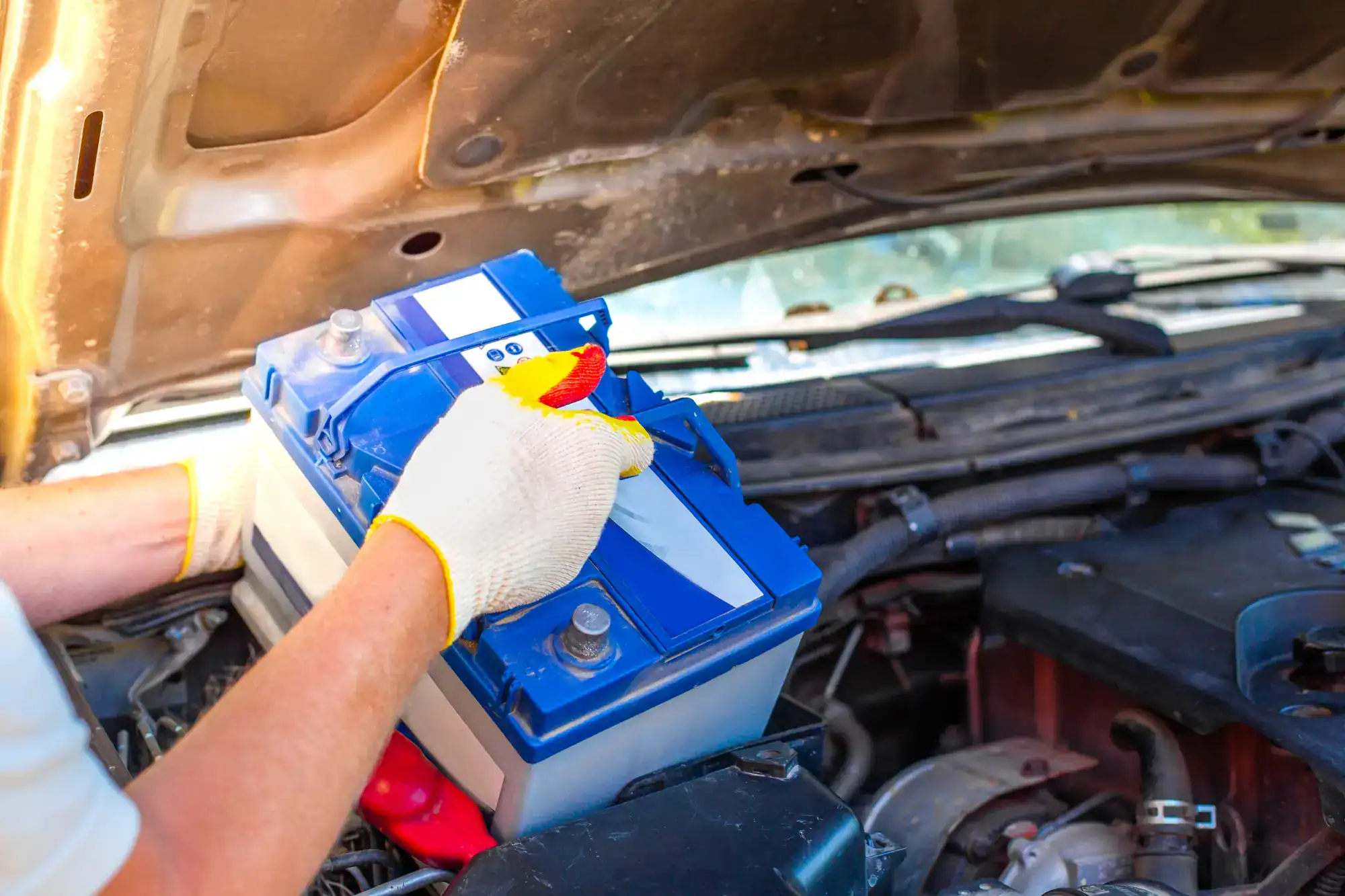
A professional battery analyzer will tell you exactly where your battery stands — not a guess, not a visual inspection, an actual reading of its current condition. If it does fail, you don’t need a tow. We offer mobile battery replacement, which means we come to you — your driveway, your workplace, wherever you are in Maricopa County — diagnose the battery on-site, and replace it if needed, with registration and system resets handled in the same visit.
Service calls start at $65, we’re available 24 hours a day including weekends and holidays, and based on where you are in the county, we’re typically there in under 30 minutes. We cover all of Maricopa County, and we’ve seen enough Arizona battery failures to know that the ones that catch people off guard are almost always the ones that didn’t have to. A little awareness about what this climate actually does to a battery goes a long way.


