
Summary:
Most people believe they could change a tire if they had to. And maybe they could — in a parking lot, on a flat surface, in daylight, with a good spare and the right tools. But that’s rarely the situation you’re actually in. A real flat tire tends to happen on the I-10 near Goodyear during rush hour, or on the Loop 101 at midnight, or in a part of Maricopa County you’ve never been to before.
The gap between “I know how” and “I can do this safely right now” is bigger than most drivers expect. Here’s what a professional tire change actually covers — and what usually gets skipped when you go it alone.
What Happens During a Professional Flat Tire Change Service
The process starts before the technician even leaves. When you call, we confirm your location, the type of vehicle you’re driving, and whether you have a usable spare. That last part matters more than most people realize — showing up without the right information wastes time you don’t have on the side of a road.
Once on-site, our technician doesn’t just grab the spare and start swapping. They assess the situation first: where the vehicle is positioned, whether it’s safe to work around, what caused the flat, and whether the spare is actually in a condition to be mounted. From there, the change itself happens with the right equipment — not the scissor jack that came with your car.
Why Checking the Spare Before Mounting It Is Non-Negotiable
Here’s something that doesn’t come up in most how-to guides: a flat spare is one of the most common reasons a DIY tire change fails. You pull out the spare, mount it, lower the car, and drive away — only to be back on the shoulder a few miles later because the spare was already low or damaged.
It happens more than you’d think, especially with compact “donut” spares that sit in the trunk for years without being checked. Our technicians check the spare’s pressure and condition before it goes anywhere near the wheel. If it’s not safe to mount, you find out immediately — not after you’ve driven onto a busy freeway ramp.
That one step alone can save you from a second breakdown the same night. Speaking of donuts: if that’s what your vehicle carries, there are real limitations attached to it. Temporary compact spares are rated for a maximum of 50 miles at no more than 50 mph. That’s not a suggestion — it’s a safety threshold.
We’ll tell you this before you drive away, so you know to head straight to a tire shop rather than merging onto the Loop 202 and treating it like a normal tire. In Maricopa County, where distances between communities can stretch 30 or 40 miles easily, knowing your donut’s limits before you leave the shoulder is genuinely important.
Driving from Buckeye to a shop in Glendale on a temporary spare at highway speeds is a different situation than a short surface-street drive. A technician who explains this isn’t being overly cautious — they’re giving you information you actually need.
Lug Nut Torque and Why It's the Step DIY Almost Always Skips
Most people tighten lug nuts until they feel snug and call it done. That’s understandable — it’s what the situation calls for when you’re cold, stressed, and trying to get off the road. But lug nuts have manufacturer-specified torque requirements, and they need to be tightened in a specific pattern — typically a star or cross sequence — to seat the wheel evenly against the hub.
Skip this step and the wheel can work loose over time. It might feel fine for the first few miles, then develop a wobble, then become genuinely dangerous. This is a predictable outcome of tightening lug nuts by feel instead of by spec.
Our technicians use calibrated torque wrenches. The lug nuts go on in the right order, to the right spec, every time. It adds maybe two minutes to the job and eliminates a failure mode that a DIY change leaves wide open.
There’s also the matter of TPMS — the tire pressure monitoring system that most modern vehicles carry. When you swap a wheel, the system may throw a warning light. We can explain what the light means, whether it will reset on its own, and whether anything needs attention before you drive.
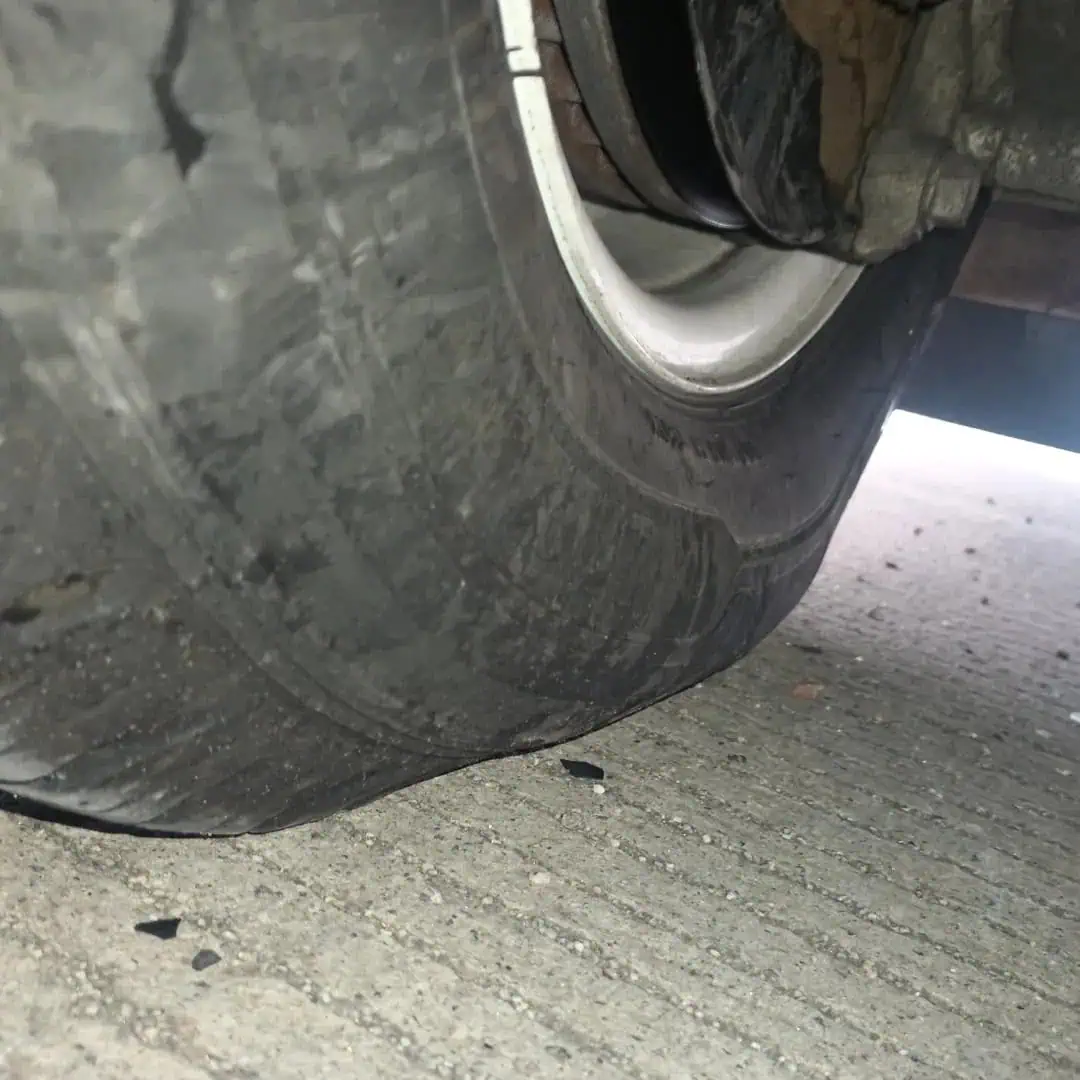
Finally, we assess the damaged tire and tell you whether it’s repairable. A nail in the tread is often fixable at a shop with a patch or plug. Sidewall damage is not — that tire is done. Knowing which situation you’re in before you leave the scene determines whether you drive to the nearest shop or schedule a full replacement. That assessment takes 60 seconds and changes your next steps entirely.
What If You Don't Have a Spare? A Growing Problem on Maricopa County Roads
This is the scenario that catches more and more drivers off guard: you get a flat, open the trunk, and there’s nothing there. No spare, no donut — just a tire inflation kit or an empty well. As of 2022, roughly 15% of new vehicles shipped without a traditional spare tire.
Manufacturers replaced them with run-flat tires, inflation kits, or simply left the space empty to save weight and cost. If this is your situation, DIY isn’t an option no matter how capable you are. You need a provider who can assess the damage on-site and, if the tire can’t be inflated and driven, get the vehicle to a shop without you having to make a second call to a separate towing company.
24/7 Flat Tire Service When There's No Spare in the Trunk
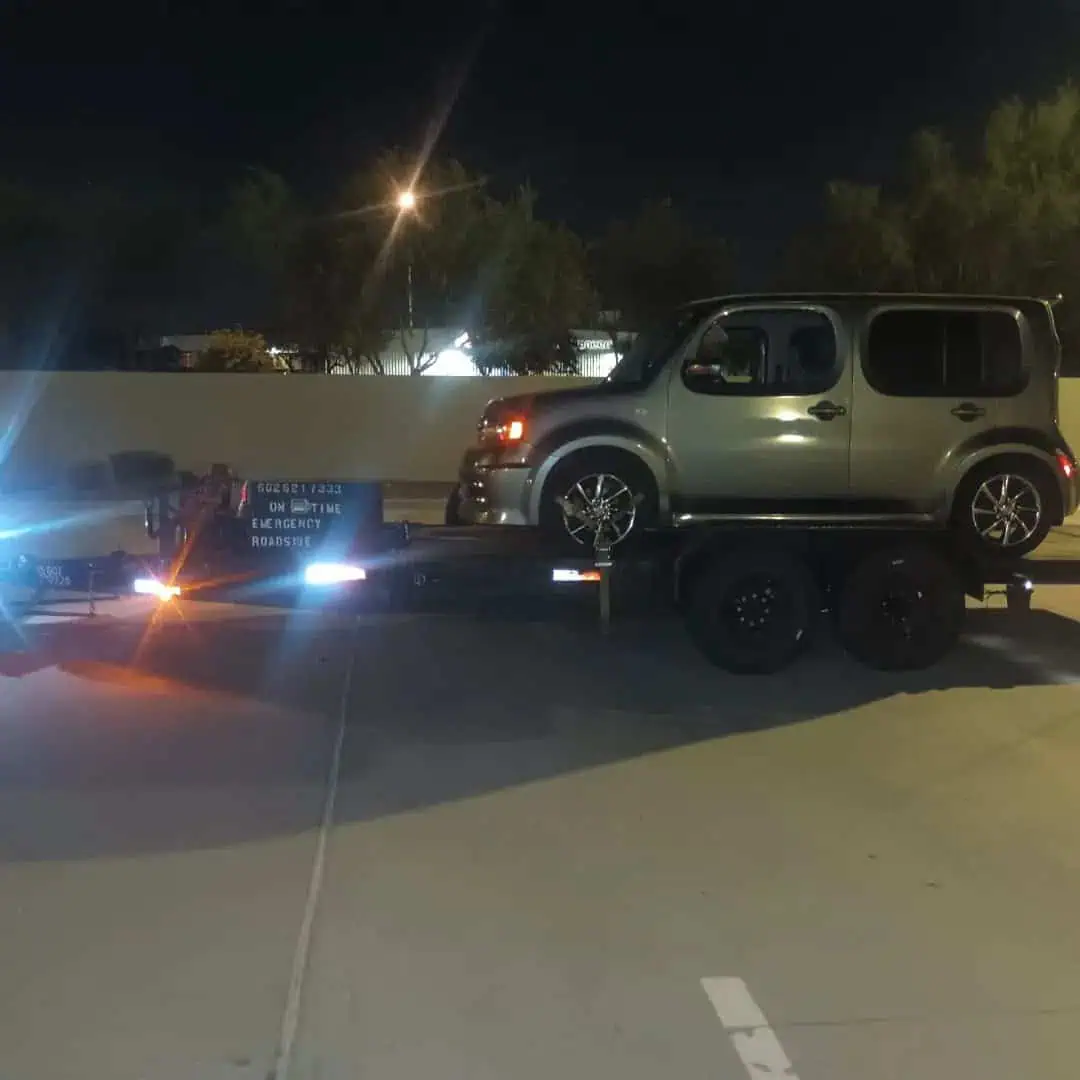
When there’s no spare and the tire is genuinely done, the only real path forward is a tow to a shop that can replace it. The problem most drivers run into is that they call a tire change service, find out the service can’t help them in this situation, and then have to start over with a towing company. That second call takes time — and if you’re sitting on the shoulder of I-17 or the Loop 303 at midnight, time is exactly what you don’t have.
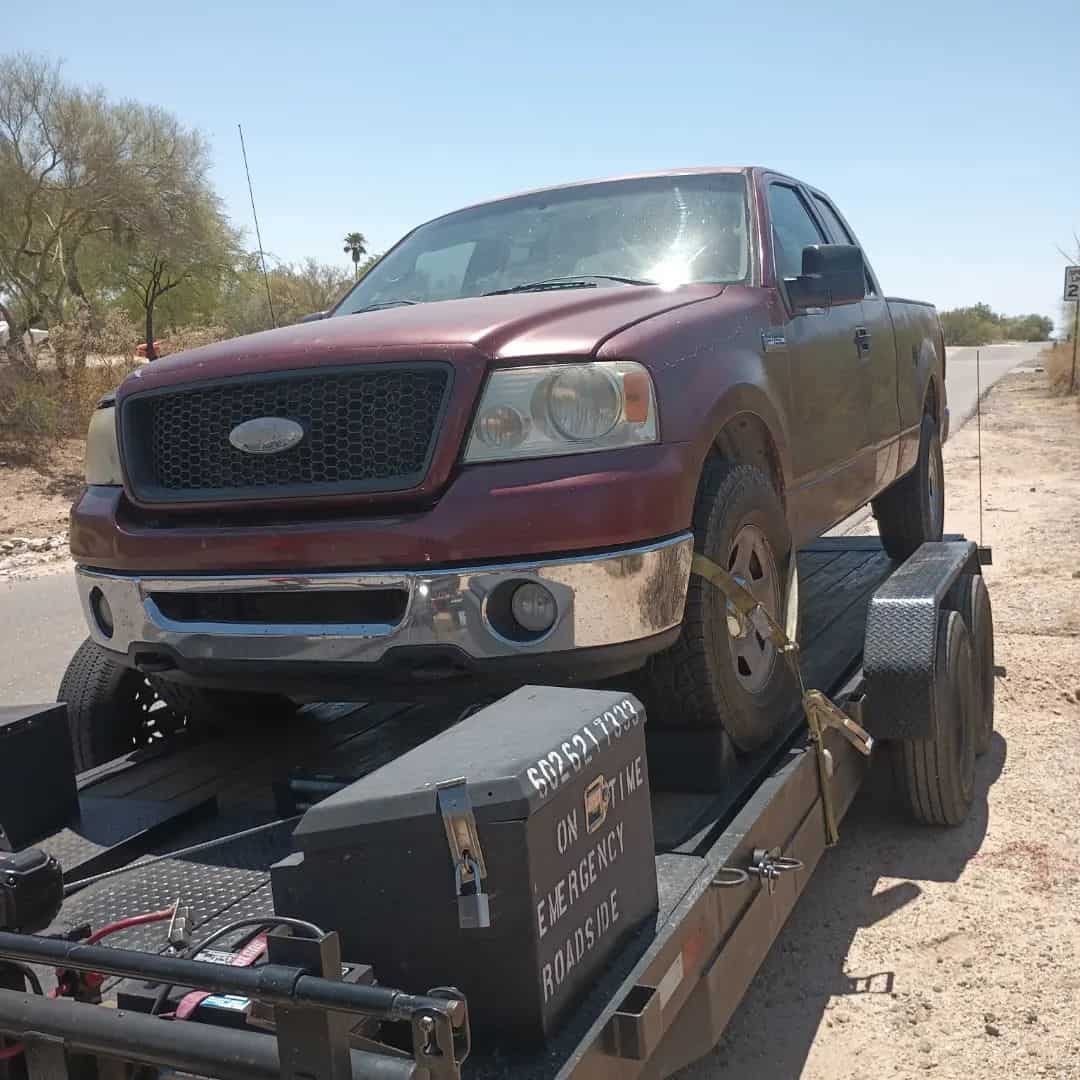
This is where a one-call provider matters. If our technician arrives, assesses the tire, and determines it can’t be safely driven on, the tow happens in the same service call. No starting over, no waiting again, no explaining your location twice to two different dispatchers.
We offer 24/7 flat tire service across all of Maricopa County — not just during business hours, not just in central Phoenix. Late Saturday nights, holiday weekends, monsoon season storms that wash debris onto the roadways and cause a spike in punctures — those are exactly the times we’re available, because those are exactly the times you need it.
Arizona’s summer months — May through October — are the peak season for tire failures. Heat causes the air inside tires to expand, which increases internal pressure. Asphalt in the Phoenix metro can reach temperatures above 160°F in summer, which accelerates rubber degradation and makes blowouts significantly more likely.
Combine that with the near-constant freeway construction generating debris fields along the I-10, Loop 101, and Loop 202 corridors, and Maricopa County has more flat tire risk per mile driven than most markets in the country. That’s why having our number saved in your phone matters more than it might somewhere else.
How Fast Does a Professional Tire Change Actually Take in Maricopa County?
This is one of the most common questions people have before they decide whether to attempt a change themselves or call for help. A professional technician who arrives with the right tools and a confirmed location typically completes the change in 15 to 20 minutes on-site. A first-time DIY attempt in a controlled setting takes 30 to 60 minutes — and that’s without the complications that show up in real roadside conditions.
But the more important number is response time, not job time. The difference between a 30-minute arrival and a 4-hour wait isn’t a minor inconvenience — in Arizona’s summer heat, it’s a safety issue. Our customers have told us directly: they were facing a 4-hour wait from another provider before they called us. We arrived in under 30 minutes.
We cover the full county, which in Maricopa County means real distances. Glendale to East Mesa is over 35 miles. We’ve made that run. The county is geographically enormous, and “we serve all of Maricopa County” only means something if a technician actually shows up in the far corners of it — Buckeye, Queen Creek, Fountain Hills, New River. We do.
If you’re trying to decide in the moment whether to attempt a DIY change or make a call, here’s a practical way to think about it: if you’re on a busy highway, it’s dark, your spare looks questionable, or you simply haven’t done this before, the 30 minutes you’d spend waiting for a technician is almost certainly faster and safer than the 45 to 60 minutes you’d spend doing it yourself — and without the risks that come with a scissor jack on an uneven shoulder.
When to Call a Professional for a Tire Change in Maricopa County
A professional tire change isn’t just a convenience upgrade over DIY. It’s a different service — one that includes spare assessment, proper torque, damage inspection, and a clear path forward if the spare isn’t usable. Most of those steps don’t show up in any how-to guide, and most drivers skip them entirely because they don’t know to look for them.
If you’re in Maricopa County and you’ve got a flat — whether you’re on a freeway shoulder, in a parking lot at 1 a.m., or stranded somewhere between Goodyear and downtown Phoenix — On Time Emergency Roadside And Battery Service LLC is available around the clock. One call handles the assessment, the change, and the tow if it comes to that.
No second calls, no waiting on hold with a dispatch center, no surprises. Save our number before you need it.