Summary:
You’re broken down. Maybe it’s on I-10 heading toward Tucson, maybe it’s somewhere out in East Mesa after a long day. You call your insurance company expecting them to send someone — and they will. For the first 10 or 15 miles. After that, you’re on your own.
This is the part nobody tells you about until it’s too late. Long distance towing and insurance coverage are two things most people assume go hand in hand. They don’t, at least not automatically. Here’s a clear breakdown of how it all actually works, what your options are, and what to look for when you need a tow that goes the distance.
What Is Long Distance Towing and How Is It Different from a Local Tow?
A local tow is exactly what it sounds like — a short haul, usually under 25 miles, to get your car to a nearby shop or your driveway. Long distance towing covers anything beyond that threshold, and the further you go, the more the logistics, cost, and equipment requirements change.
The pricing structure is different too. Local tows typically run $2 to $5 per mile, but long-distance rates often drop to around $0.75 to $1.25 per mile because the haul is longer and the math works out differently. That said, there’s almost always a hook-up or base fee on top of the mileage rate — usually somewhere between $35 and $150 depending on the company and the job.
One thing that trips people up is the term “light-duty towing.” It doesn’t mean simple or easy — it refers to the class of vehicle being towed. Light-duty covers standard passenger cars, SUVs, and light pickup trucks. Larger vehicles like heavy-duty trucks or big RVs fall into medium or heavy-duty territory and require different equipment. Knowing that distinction matters before you call, because not every operator is set up for every vehicle type.
What Does Long Distance Towing Actually Cost?
The honest answer is: it depends on the distance, the vehicle, and the time of day — but the numbers are usually more manageable than people expect.
For a 100-mile tow, you’re generally looking at somewhere between $100 and $400. A 500-mile haul — say, from Phoenix out to California or up toward Colorado — typically runs $850 to $1,100. Cross-country tows of 1,000 miles or more can exceed $1,600, but those are less common for emergency situations and more typical of planned vehicle transport.
What drives the cost up quickly is the type of vehicle and the time of call. RV towing rates run higher than standard cars — closer to $5.50 per mile versus $3.00 — because of the size and equipment involved. Calling after hours, on a weekend, or on a holiday will also push the price up with most operators. That’s worth knowing upfront, especially if you’re stranded on a Saturday night in the Phoenix heat.
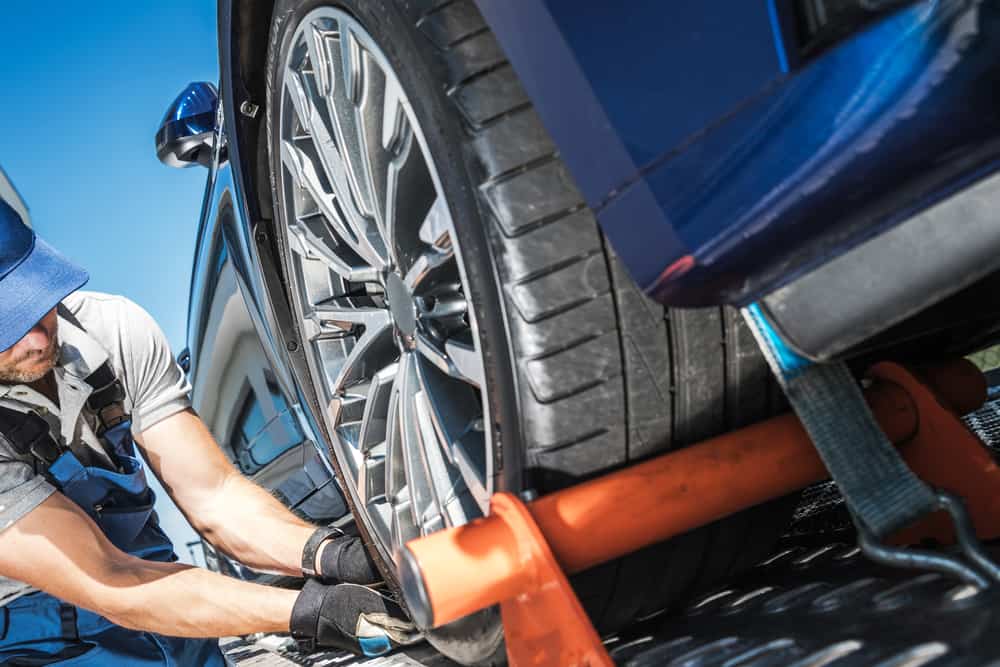
The other factor people overlook is equipment. Flatbed towing — where all four wheels are off the ground — is the right call for most long-distance situations. It prevents wear on the drivetrain and reduces the risk of damage during a long haul. Wheel-lift towing is fine for short local moves, but over distance, it puts stress on parts that weren’t designed to handle it. Any towing company worth calling for a long-distance job should be running flatbed trucks. If they’re not, that’s worth asking about before you agree to anything.
Always ask for a written or verbal quote before the hook-up. Reputable operators give you a number before they touch your vehicle. If someone is vague about pricing until after your car is on the truck, that’s a red flag. Transparent pricing isn’t a bonus feature — it’s just how professional operators work.
When Is a Long Distance Tow Actually Necessary?
Sometimes the situation makes the decision for you. If your engine seizes on the highway 80 miles from home, there’s no debating it — you need a long-distance tow. But there are plenty of in-between scenarios where people aren’t sure whether to tow or try to limp the car to a closer shop.
The general rule is this: if driving the vehicle further risks more damage, don’t do it. A broken front axle, a blown transmission, a seized engine, or a major coolant leak are all situations where driving even a few more miles can turn a $1,500 repair into a $5,000 one. The cost of a tow to your preferred mechanic almost always beats the cost of compounding the original problem.
There’s also the practical reality of where you break down. In Maricopa County, “local” is a relative term. The Phoenix metro area spans hundreds of square miles. A breakdown in East Mesa when you’re based out of Glendale is already 40-plus miles — that’s not a short tow by any standard. We’ve handled exactly that kind of job: a broken front axle, hauled from East Mesa all the way back to the West Valley. It’s a real scenario that happens regularly in this market, and it’s one of the reasons having a tow provider with genuine range across the Phoenix metro area matters.
The other time a long-distance tow becomes necessary is when your insurance’s towing coverage runs out — which, as it turns out, happens a lot sooner than most people realize.
Towing for Insurance Companies: What's Actually Covered and Where It Stops
Most standard auto insurance policies don’t include towing coverage by default. It’s an add-on — usually called roadside assistance or towing and labor coverage — and it costs somewhere between $2 and $8 per month. That’s genuinely affordable, and for most drivers it’s worth having. The catch is what that coverage actually gets you when something goes wrong far from home.
The coverage limits are where things get frustrating. Most insurance-based roadside assistance plans cover somewhere between 10 and 15 miles per tow. Some go higher, but 10 to 15 miles is the industry standard for basic add-ons. That’s enough to get you to a nearby shop if you break down close to home. It’s not enough if you’re stranded on the highway an hour outside of Phoenix.
AAA works on a tiered model that’s a little more generous, but still has real limits. The Classic membership covers only 5 miles per tow. The Plus level goes up to 100 miles. Premier goes up to 100 miles as well, with one 200-mile tow per year. If you’re a Classic member and you break down 30 miles from home, you’re covering most of that haul out of pocket regardless.
Auto Towing Insurance: Which Coverage Types Actually Include Towing?
There are a few different ways towing can be covered under an auto insurance policy, and they don’t all work the same way.
Roadside assistance add-ons are the most common. You pay a small monthly fee and the insurer dispatches a service provider when you call. The coverage typically includes towing up to the mileage limit, plus things like jump starts, flat tire changes, and lockout service. The limitation is that the insurer controls who gets dispatched — and that third-party contractor may not be the fastest or the most local option available to you.
Towing and labor coverage is a slightly different product. It reimburses you for towing costs up to a set dollar amount — often $50 to $100 — rather than dispatching a provider directly. You call whoever you want, pay upfront, and submit a claim with your receipt. It’s more flexible, but the reimbursement ceiling is often lower than the actual cost of a long-distance tow.
Collision and comprehensive coverage can also include towing in certain circumstances. If your car is towed after an accident that’s covered under your collision policy, that tow is often included. Same with a covered comprehensive event like a flood or a fire. But these aren’t roadside assistance — they’re specific to the covered incident, and they don’t apply to a standard mechanical breakdown.
What matters practically is knowing which type of coverage you have before you need it. Check your policy for the mileage limit and the reimbursement cap. If you’re not sure, call your insurer and ask directly. The answer might change how you think about your coverage — and whether you want to add to it before your next long drive.
What Happens When Your Tow Exceeds Your Insurance's Mileage Limit?
This is the gap that catches most people off guard. Your insurance covers the first 15 miles. You need 60. The insurer’s tow truck shows up, takes your car to the nearest shop — not your preferred mechanic — and leaves you to figure out the rest.
In that situation, you have a couple of options. You can have the car towed a second time from the shop to your destination, paying out of pocket for the remaining distance. Or you can call a local towing company directly, pay for the full haul upfront, and submit a reimbursement claim to your insurer for whatever portion falls within your coverage limits. Either way, you’re spending money beyond what the policy covers — the question is just how you manage it.
The reimbursement path is often the cleaner option if you need to get your car to a specific shop. To make that work, you need a receipt from the towing company that clearly shows the date, the pickup and drop-off locations, the mileage, and the total charge. A professional towing operator will have no problem providing that documentation. It’s standard practice. If someone can’t or won’t give you a proper receipt, that’s a signal to look elsewhere.
One thing worth knowing: in Phoenix’s summer heat, waiting for an insurance-dispatched tow that might take two or three hours is not always the safest call. If you’re broken down on I-10 in July when it’s 110 degrees outside, your personal safety matters more than saving a few dollars on the dispatch fee. Calling a local operator who can get to you in under 30 minutes and then submitting a partial reimbursement claim afterward is a completely reasonable approach — and one that more drivers should know is available to them.
We work with drivers in exactly this situation regularly. We provide clear receipts and documentation that make the insurance reimbursement process straightforward. You handle the tow, we handle the paperwork side of it, and you get your car where it needs to go without waiting on hold with a national dispatch center while the temperature climbs.
Choosing a Long Distance Towing Company in Phoenix
When you’re evaluating a towing company for a long-distance job, the basics matter more than the marketing. Do they carry on-hook insurance to protect your vehicle while it’s being towed? Do they use flatbed trucks for long hauls? Will they give you a clear price before they hook up your car? Can they actually get to you quickly, not just promise they can?
In Maricopa County, those questions have real weight. The distances are real, the heat is real, and the difference between a 25-minute arrival and a four-hour wait is not a small thing when you’re stranded on the side of a desert highway.
We’ve been handling towing and roadside calls across Glendale, Scottsdale, Tempe, East Mesa, and the broader Phoenix metro for 13 years. If you’re dealing with a breakdown — whether it’s a short hop or a long haul — call 602-621-7333. We’re available 24 hours a day, every day, and service calls start at $65.
—
FREQUENTLY ASKED QUESTIONS