Summary:
Most people don’t think about roadside assistance until they’re already stranded. Then suddenly it matters a lot — what’s covered, how fast someone shows up, and whether the number you’re calling actually goes to a person who can help right now.
This guide walks through what 24/7 roadside assistance actually includes in practice, not just in theory. You’ll learn which situations qualify, what the common gaps are, and what separates a provider that shows up in 25 minutes from one that quotes you a four-hour window. By the end, you’ll know exactly what to look for — and what questions to ask before you need to ask them.
What Emergency Road Service Actually Includes
Emergency road service covers the situations that leave you stuck — a dead battery, a flat tire, a lockout, an empty tank, or a mechanical failure that means the car isn’t moving under its own power. We handle all of those on-site when possible, and tow you when it isn’t.
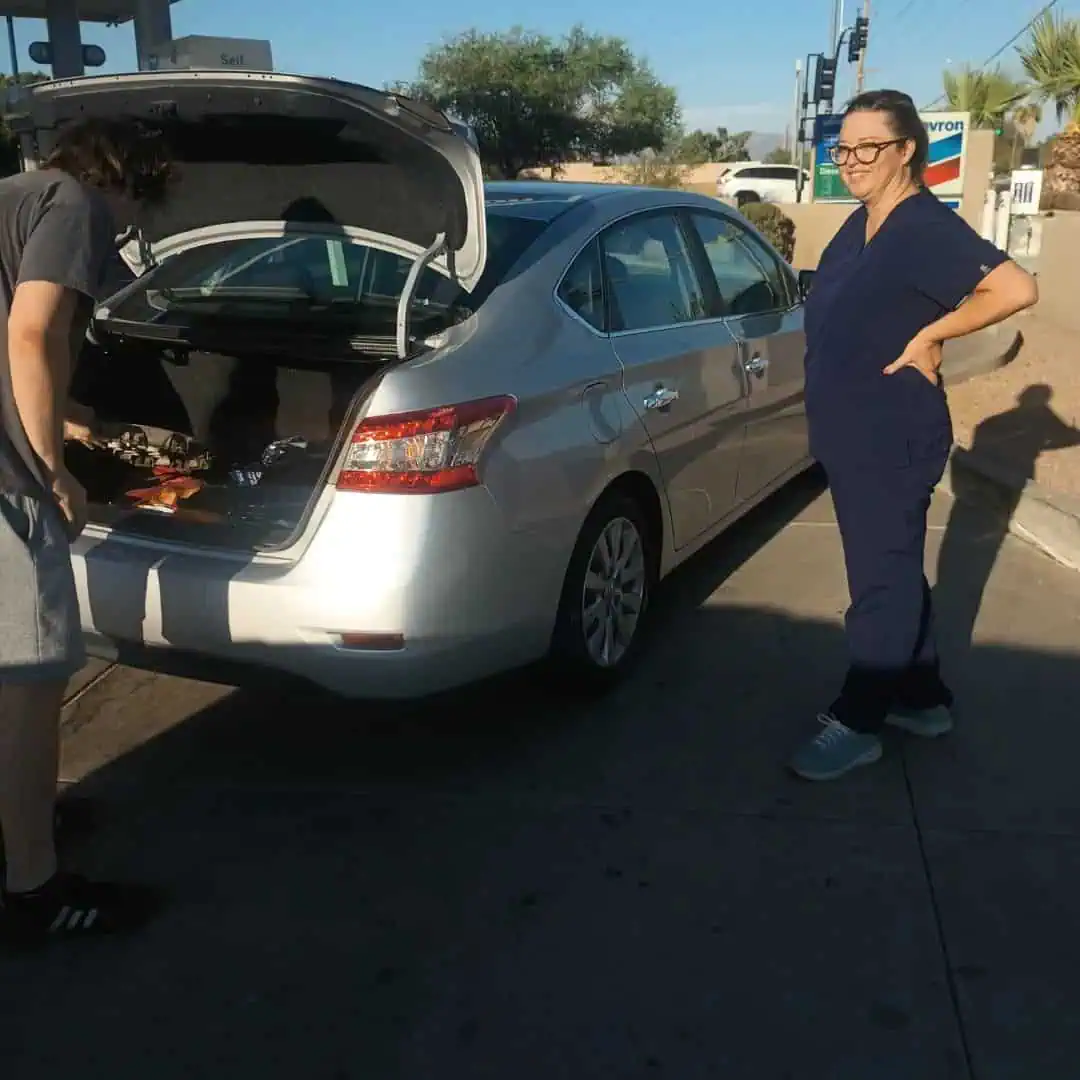
What trips people up is assuming roadside assistance only applies to breakdowns on a highway or major road. In reality, most incidents happen in parking lots, driveways, and residential streets. If your car won’t start in a grocery store parking lot in Glendale at 9pm, that counts. We come to you wherever you are — not just where the name implies.
Which Situations Qualify for 24 Hour Roadside Assistance?
The most common calls fall into a handful of categories, and it’s worth knowing all of them because people routinely underestimate what’s covered.
Dead battery and jump starts are the single most frequent reason people call for roadside help — especially in Glendale, where summer heat accelerates battery wear faster than most drivers realize. Heat causes battery fluid to evaporate and corrodes the internal plates, which means a battery that seemed fine in May can fail without warning in July. A jump start gets you going if the battery still holds a charge. If it doesn’t, our mobile battery replacement service means you don’t have to get towed at all — we install a new battery on the spot.
Flat tires are another common one, and the situation is more complicated than it used to be. Many newer vehicles don’t include a full-size spare — some don’t include any spare at all. Our technicians can mount your spare if you have one, but if you don’t, towing becomes the next step. Knowing this in advance matters.
Lockouts happen more than people admit. Keys locked inside, a key fob that stopped working, a trunk that won’t open — these all qualify. Our skilled technicians can get you back in without damaging the door or window, which is the part most people are actually worried about.
Running out of fuel is one of the more embarrassing calls to make, but it happens constantly, and there’s no reason to feel awkward about it. Our emergency fuel delivery gets you enough gas to reach the nearest station. It’s a simple fix that saves you a long walk in the Arizona heat.
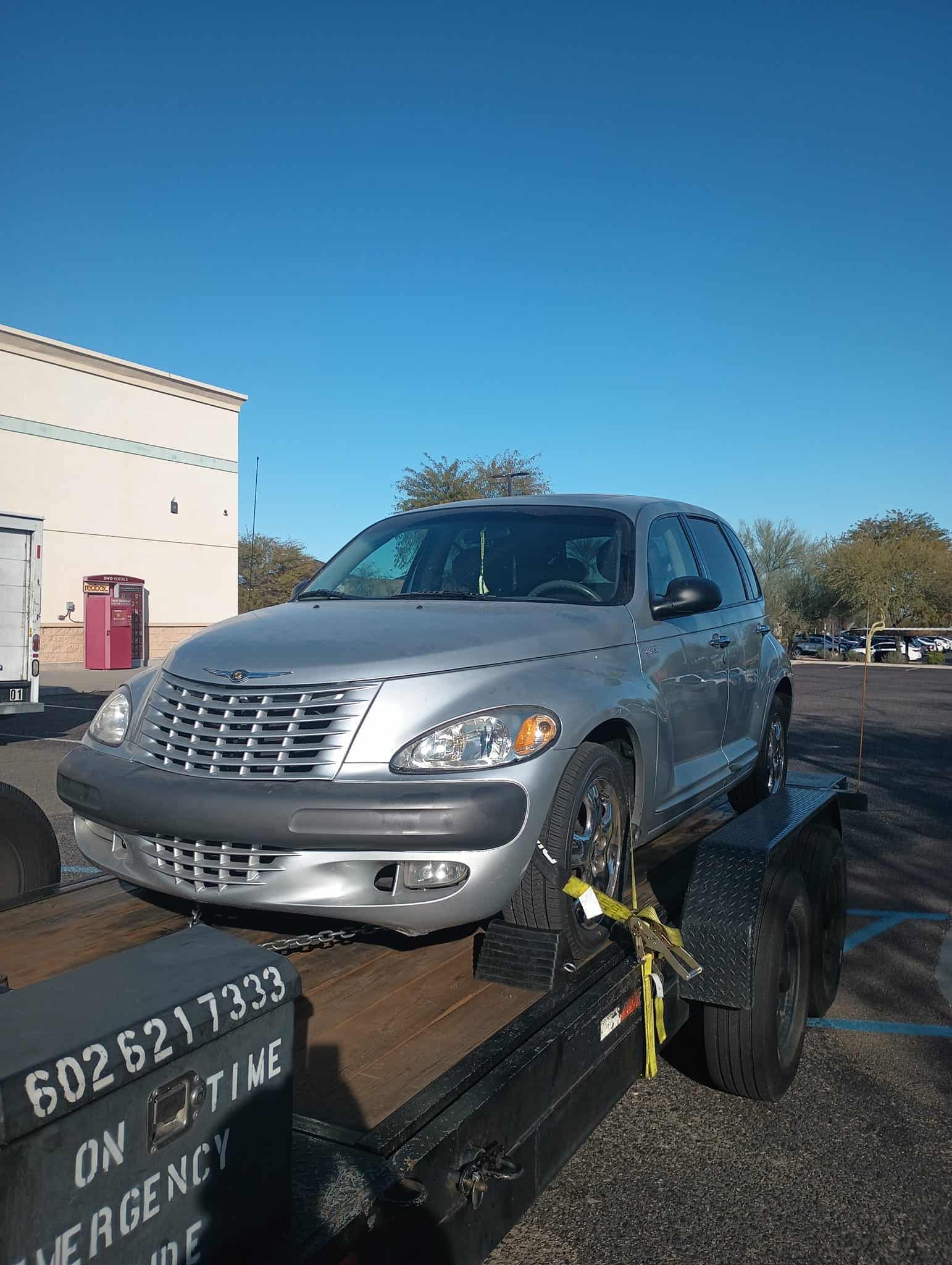
Then there’s towing — for situations where the car can’t be fixed roadside. Whether that’s a blown engine, a transmission failure, or an accident, we tow your vehicle to wherever it needs to go. The key distinction with us as a direct-call local provider versus an insurance-based program is destination. Many insurance roadside plans only cover a tow to the nearest shop. With us, you choose where your vehicle goes within our service area.
Does 24/7 Roadside Assistance Cover Specialty Vehicles Like RVs?
This is one of the most common gaps in standard roadside programs, and it catches RV owners off guard more often than you’d expect. Most national roadside assistance plans are built around passenger vehicles. When you’re driving a Class A motorhome or towing a camper trailer, the coverage either doesn’t apply or requires a separate, more expensive plan.
We’re equipped for specialty vehicles and can handle RV towing, tilt trailer recovery, and larger vehicles that standard tow trucks aren’t rated for. It’s worth confirming this before you need it — not while you’re parked on the side of the I-10 at 10pm on a Saturday wondering if your provider can actually help.
The same applies to European vehicles with specific battery requirements. BMW, Audi, Volkswagen, and certain Honda models require what’s called a battery registration when the battery is replaced — it’s a software process that tells the car’s computer the new battery is installed. Skip it, and you can end up with charging system errors, reduced battery life, or other electrical issues. Most roadside providers don’t offer this at all, and dealerships charge separately for it. We include battery registration free with every battery purchase for these vehicles, which is something worth knowing if you drive one of them.
The broader point is that “24/7 roadside assistance” means different things depending on who’s providing it. A plan that covers a standard sedan but not your RV, or a jump start but not a battery replacement, leaves gaps that show up at the worst possible time. Before you’re in an emergency, it’s worth knowing exactly what we handle — and what falls outside our scope.
Emergency Roadside Assistance: What to Expect When You Call
Calling for emergency roadside assistance should be straightforward — you describe the problem, give your location, and get a clear answer on when someone will arrive. That’s how it works when you call us directly. With a national insurance-based program, the experience is often different: a call center, a transfer, a third-party dispatch, and a wait window that can stretch to three or four hours.
Response time is the thing that matters most in an actual emergency, and it’s also the thing that’s hardest to verify until you’re in one. Customer reviews are the most honest signal you’ll find. When multiple people describe a technician arriving in under 30 minutes — including late-night calls and long-distance dispatches across Maricopa County — that’s a more reliable indicator than anything a provider writes about itself.
What Happens When Your Insurance Roadside Assistance Has a 4-Hour Wait?
This is a scenario that plays out constantly in the Phoenix metro area and throughout Glendale, and it’s worth being direct about it. You call the roadside number on the back of your insurance card. They route you to a dispatch center. The dispatch center finds a contractor in your area — which can take time, especially late at night or on a weekend — and gives you a wait window. Two hours. Maybe four.
In a city where summer temperatures stay above 100°F well into the evening, sitting in or near a disabled vehicle for four hours isn’t just inconvenient. It’s a safety issue. The same goes for a parent with young children, someone who works a night shift and can’t afford to miss it, or anyone stranded in an unfamiliar area after dark.
We operate differently. There’s no national dispatch layer, no third-party contractor network, no hold music. You call, a real person answers, and one of our technicians heads your direction. We cover the full Maricopa County area — from Glendale out to East Mesa — and our standard response time is under 30 minutes. That’s not a marketing claim; it’s what our customers consistently report.
The honest answer to the “should I just use my insurance roadside assistance?” question is: it depends on how long you’re willing to wait. If speed matters — and in most real emergencies, it does — having our direct local number saved in your phone is worth more than any plan that routes through a call center.
How Much Does 24-Hour Roadside Service Cost Without Insurance?
Pricing is one of the most common sources of anxiety in this category, and understandably so. The roadside assistance industry has a reputation for quoting one number and charging another, especially when a driver is stranded and has limited options. Knowing what to expect before you call removes that anxiety entirely.
Our service calls start at $65. That’s a published starting price, not a bait-and-switch opener. The final cost depends on the specific service — a jump start is different from a long-distance tow — but transparent pricing from the first conversation is something we take seriously. It’s also something customers notice. Pricing comes up in our reviews not because we asked people to mention it, but because fair pricing in this industry is uncommon enough to be worth commenting on.
For context, roadside assistance add-ons through insurance typically run $50 to $100 per year, which sounds inexpensive until you factor in the response time trade-off. We charge per incident, which means you pay when you use our service — and you get a local technician who arrives quickly rather than a contracted third party working a regional territory.
For Glendale and the broader Phoenix metro area, the math often favors having our direct local number available even if you already have coverage through insurance. The two aren’t mutually exclusive. Your insurance plan is a backup. We’re what you call when you need help now, not help eventually.
One more thing worth knowing: a 24 hour roadside service that actually answers at 2am is rarer than the “24/7” label suggests. Some providers use answering services after hours that log your request and dispatch in the morning. We answer every call, every hour, every day of the year — including weekends, holidays, and the kind of late Saturday evenings when most people assume no one will pick up.
Finding Reliable 24/7 Roadside Assistance in Glendale, AZ
The short version: 24/7 roadside assistance covers more than most people assume, the quality gap between providers is significant, and response time is the number that matters most when you’re actually stuck.
In Glendale and across Maricopa County, the combination of extreme summer heat, high vehicle dependency, and long distances between destinations makes having a reliable local provider more important than it might be in other markets. A dead battery at 7pm in July isn’t a minor inconvenience — it’s a situation that needs to be resolved quickly, by someone who actually shows up.
If you want a provider with 13 years of experience in the Phoenix metro, transparent pricing, genuine 24/7 availability, and a track record of arriving in under 30 minutes, we’re worth saving in your phone before you need it.